





硕士高级微电子系统工程
MSc Advanced Microelectronic Systems Engineering

 英国
英国
学历文凭
Masters Degree (Taught)

专业院系
Faculty of Engineering

开学时间

课程时长

课程学费

国际学生入学条件

IDP—雅思考试联合主办方

雅思考试总分
6.5
- 雅思总分:6.5
- 托福网考总分:88
- 托福笔试总分:160
- 其他语言考试:IELTS Academic (at a test centre or online): 6.5 overall with 7.0 in reading and listening, and no score below 6.0 TOEFL iBT and TOEFL at Home: 88 overall with R24 L22 S22 W22 Pearson PTE Academic (Test Centre): 67 overall with no lower than 71 in reading and listening and no lower than 64 in all other skills C2 Proficiency, formerly known as Cambridge English: Proficiency (CPE): Grade C, or Level C1 C1 Advanced, formerly known as Cambridge English: Advanced (CAE): Grade B, or Grade C with reading and listening at 184, or Level B2 with reading and listening at 184, and no skill below 168
CRICOS代码:
申请截止日期: 请与IDP联系 以获取详细信息。
课程简介
Bristol and the surrounding area host a thriving and world-renowned semiconductor design industry. The groups involved in microelectronics research at the University of Bristol have collaborative links with multinational companies in the microelectronics industry. These organisations have identified a shortfall in graduates with the necessary qualifications and professional skills to work in the sector, so this programme has been designed to meet this need.A range of taught subjects covers core topics, such as digital and analogue application-specific integrated circuit (ASIC) design, digital signal processor (DSP) and field-programmable gate array (FPGA)-based computing, integrated sensors and actuators, radio-frequency and mixed-signal design. Changes are made periodically to reflect important emerging disciplines, such as electronics for the Internet of Things (IoT), biomedical applications and quantum photonics applications.The programme offers you the opportunity to learn from microelectronics, nanoelectronics and computer science experts. You could move on to start working straight after your degree or continue your studies on a PhD. We aim to provide you with a range of contemporary design skills to supplement theoretical knowledge. Lectures are accompanied by lab exercises in state-of-the-art industrial electronic design automation (EDA) software to give you valuable experience in a professional environment.
相关申请
 预科
预科- 奖学金
- 实习机会
- 在校学习
 跨境学习
跨境学习- 校园授课-线上开始
- 在线/远程学习
开学时间&学费
学费信息仅供参考,请与IDP联系以获取详细信息
| 开学时间 | 时长 | 学费 | 地点 |
|---|
学校排名

世界排名78
数据源:
泰晤士高等教育世界大学排名
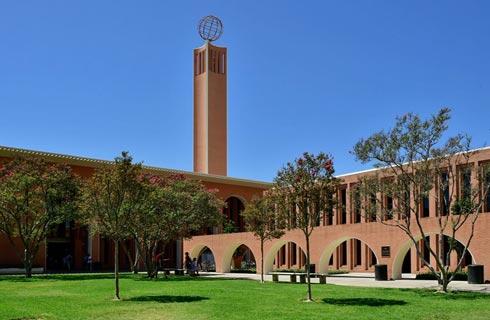
关于布里斯托大学

布里斯托尔大学在''2025年QS世界大学排名''中名列全球第54位、英国第9位,因世界一流的教育和具有深远影响力的研究而享誉国际。该校共有3.2万名学生,其中近三分之一为国际学生,那里也因此而成为一个具有多元学术思想的社群。布里斯托尔大学在英国整体就业结果排名(2025年QS)中名列第12位,其毕业生受到本地及国际雇主的青睐。学生可享受专业的职业指导和就业能力提升计划,这些支持和服务旨在增强学生的自信、技能和实践经验,助力其实现自己的职业目标。 作为备受推崇的罗素大学集团(Russell Group)和世界大学联盟(Worldwide Universities Network)的成员,布里斯托尔大学高度重视科研的质量和社会影响力。该校共有30多个研究中心,研究人员和学生们汇聚于此,针对气候变化和人权等全球性紧迫问题,通力协作提供创新解决方案。在''泰晤士高等教育''(Times Higher Education)对''2021年卓越研究评估框架''(Research Excellence Framework)的分析中,布里斯托尔大学的科研实力位列全英第五。在''2025年QS世界大学学科排名''中,该校共有29个学科跻身全球30强。该校还拥有丰富的课外活动,学生会积极活跃,运营管理着350多个俱乐部和社团。走出校园,在常年荣膺"英国最宜居城市"称号的布里斯托尔,学生可尽情探索这座活力四射、历史悠久的多元化都市。
本校相关课程

理学硕士(荣誉)化学
学历文凭
Bachelor Degree
开学日期
课程费用总额

考古学和人类学文学士学位
学历文凭
Bachelor Degree with Honours
开学日期
课程费用总额

理学学士(荣誉)学位
学历文凭
Bachelor Degree with Honours
开学日期
课程费用总额

理学学士(荣誉)数学和哲学
学历文凭
Bachelor Degree with Honours
开学日期
课程费用总额

工学(荣誉)数学与计算机科学
学历文凭
Bachelor Degree
开学日期
课程费用总额

具有工业经验的化学(荣誉)理学硕士
学历文凭
Bachelor Degree
开学日期
课程费用总额
其他相关课程

工程四级证书
 希拉巴克斯特培训中心(私立)
学历文凭
Certificate IV
开学日期
课程费用总额

工程四级证书-制造
霍姆斯格兰职业技术学院学历文凭
Certificate IV
开学日期
课程费用总额
设计文凭(UniLink)(8个月)
斯威本科技大学泰晤士高等教育世界大学排名:282
学历文凭
Unilink Diploma
开学日期
课程费用总额

专业工程学硕士(生物医学)
悉尼大学泰晤士高等教育世界大学排名:54
学历文凭
Masters Degree (Coursework)
开学日期
课程费用总额
工程科学学士
伊迪斯科文大学学历文凭
Bachelor Degree
开学日期
课程费用总额
细木工三级证书
霍姆斯格兰职业技术学院学历文凭
Certificate III
开学日期
课程费用总额