



化学化学荣誉
MChem (Hons) Chemistry

 英国
英国
学历文凭
Bachelor Degree

专业院系
Chemistry

开学时间

课程时长

课程学费

国际学生入学条件

IDP—雅思考试联合主办方

雅思考试总分
- 雅思总分:
- 托福网考总分:
- 托福笔试总分:
- 其他语言考试:
CRICOS代码: F101
申请截止日期: 请与IDP联系 以获取详细信息。
课程简介
Chemists are great problem solvers and analytical thinkers; they have been instrumental in developing our modern world. Our Chemistry degree equips you with a multidisciplinary skill set that will prepare you for your career. Our four-year MChem degree programme allows you to explore advanced core topics, including chemical synthesis and materials, chemical physics and analysis, chemical computation and theory, and chemical biology. It also contains a significant research component, where you will work for 20 weeks on a contemporary research problem in one of our research groups. We offer a diverse range of modules that are developed, taught and assessed by world-leading academics, whose cutting-edge research continually shapes the content that they teach. Our modern approach combines the traditionally segregated subjects of organic, inorganic and physical chemistry, and teaches chemistry in logical stages. As part of the degree, you will receive an expansive introduction to the foundations of chemistry, from the fundamentals of atoms and molecules, to chemical reaction kinetics. Later years build on these foundations, and develop advanced knowledge and skills in modern chemical theory and contemporary practical techniques. In your first year you will study the core chemistry modules - comprising two-thirds of the year - along with optional modules that can be selected from a range of subject areas taught in the University. You will develop your practical skills in our brand-new, research-grade labs, with access to an impressive range of equipment. Alongside the technical knowledge, you will gain excellent transferable skills in communication, research, data analysis, mathematics and computation, and analytic and logical thinking; all of which can be applied to many different career paths. Your second year builds upon the broad fundamentals of first year, and you will cover some familiar topics in more detail, such as organic synthesis, spectroscopy and kinetics, while new, more advanced topics are introduced, such as d-metal chemistry, soft-matter chemistry and quantum chemistry. In your third year, you will study a range of advanced topics, as well as a research skills module to hone your research skills and further equip you with techniques relevant to your final year research project. You will also have the opportunity to choose from a variety of optional modules in more specialised areas of chemistry. Your final year will enable you to apply your skills by undertaking a major research project, which provides an exciting opportunity for you to address a significant research problem as part of one of our research groups, alongside postgraduate students and postdoctoral staff. Additionally, you will study a series of advanced taught modules that allow you to examine areas of chemistry in greater depth. We are a modern and inclusive department committed to small group teaching which we believe fosters a highly supportive and productive learning environment. In keeping with the University’s ethos, we value maintaining an excellent student-to-staff ratio, and we want to ensure that you are treated as an individual. Our new Chemistry Building offers space to socialise, as well as facilities to help you excel in your studies. Our open-door policy enables students to call in for help and advice at any time. Alternative Programmes The MChem programme is also offered with a Study Abroad or an Industrial Placement year, allowing you to expand your horizons either through a year at one of our partner institutions overseas, or by embarking on a placement within a chemistry-related workplace. As these degrees share a common first- and second-year with the BSc and other MChem programmes, there is flexibility to switch between programmes once you are in Lancaster (subject to academic requirements).
相关申请
 预科
预科- 奖学金
- 实习机会
- 在校学习
 跨境学习
跨境学习- 校园授课-线上开始
- 在线/远程学习
开学时间&学费
学费信息仅供参考,请与IDP联系以获取详细信息
| 开学时间 | 时长 | 学费 | 地点 |
|---|
学校排名

世界排名146
数据源:
泰晤士高等教育世界大学排名
关于兰卡斯特大学

兰卡斯特大学是一所研究型大学,位于英格兰西北部兰卡斯特。这所大学坐落在宽敞的绿色校园中,拥有由来自世界各地120多个国家和地区的学生组成的群体。来到兰卡斯特大学的学生将成为国际群体的一员,由世界一流的教师为其讲授知识。兰卡斯特大学在英国大学排行榜上位列前15名: 在2026年完全大学指南中位列第10位 在2026年卫报大学指南中位列第14位 在2026年《泰晤士与星期日泰晤士优秀大学指南》中排名第15兰卡斯特大学还受到全球认可获得QS 5星评级。兰卡斯特大学与全球教学和研究机构拥有广泛的联系,这为学生提供了许多极好的海外留学或工作的机会。兰卡斯特大学不仅与美国和中国的大学有着紧密联系,还与中国、德国、加纳、印度尼西亚和马来西亚的院校建立了战略教学合作伙伴关系。兰卡斯特大学的学生可以充分利用该校的现代化绿色校园。校园周围环绕着林地,学生可在林间小径步行游览。校园中还有许多绿色空间,是学生们享受安静时刻或与朋友交往的理想场所。除了大量休闲绿地和一流的设施,校园中还有美术馆、剧院、电影院、餐馆、咖啡馆、酒吧、邮局和美发沙龙。图书馆学期期间每周七天全天24小时开放,提供大量科技化工作区和安静的学习区,以满足各种学习方式。学生还可以免费租借图书馆的个人电脑和笔记本电脑。
本校相关课程

生物医学理学士学位
学历文凭
Bachelor Degree with Honours
开学日期
课程费用总额
生物学与心理学学士荣誉学位
学历文凭
Bachelor Degree with Honours
开学日期
课程费用总额
生物科学与生物医学学士学位
学历文凭
Bachelor Degree with Honours
开学日期
课程费用总额
生物科学理学士荣誉学位。
学历文凭
Bachelor Degree with Honours
开学日期
课程费用总额
生物化学与遗传学士学位
学历文凭
Bachelor Degree with Honours
开学日期
课程费用总额
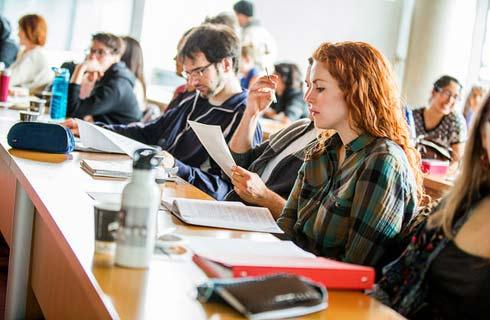
生物化学学士学位
学历文凭
Bachelor Degree with Honours
开学日期
课程费用总额
其他相关课程
化学哲学博士(研究部)-化学
 悉尼新南威尔士大学
学历文凭
Ph.D.
开学日期
课程费用总额
Graduate Diploma of Laboratory Quality Analysis and Management
麦考瑞大学泰晤士高等教育世界大学排名:167
学历文凭
Graduate Diploma
开学日期
课程费用总额
化学科学硕士
乐卓博大学泰晤士高等教育世界大学排名:267
学历文凭
Masters Degree (Coursework)
开学日期
课程费用总额

哲学硕士(化学)
科廷大学泰晤士高等教育世界大学排名:256
学历文凭
Masters Degree (Research)
开学日期
课程费用总额

哲学博士(化学)
纽卡斯尔大学学历文凭
Ph.D.
开学日期
课程费用总额
化学理学学士
莫道克大学泰晤士高等教育世界大学排名:438
学历文凭
Bachelor Degree
开学日期
课程费用总额